MATLAB Environment for 5G Research: A Beginner’s Guide to Wireless Simulation
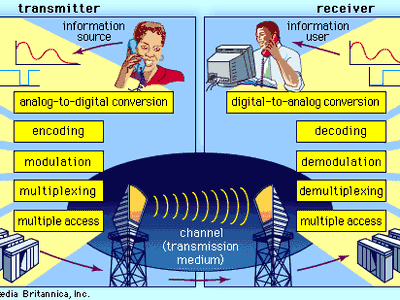
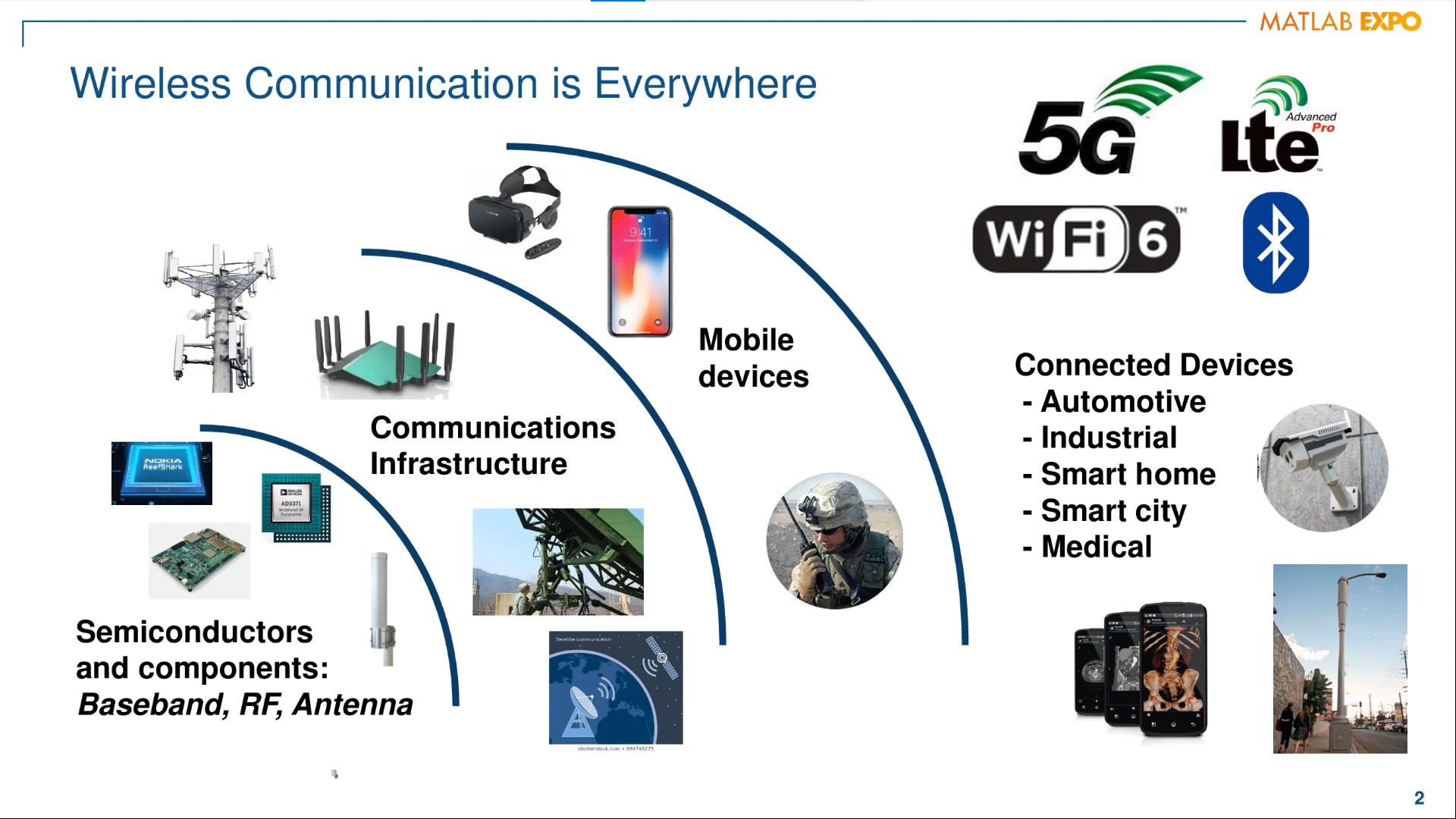
telcomatraining.com – As the world moves rapidly toward 6G and beyond, the fifth-generation (5G) wireless network remains a critical field of research for engineers and scientists. Understanding 5G technologies—such as beamforming, massive MIMO, and mmWave communication—requires more than just theoretical knowledge. Researchers need practical simulation tools to model, test, and analyze wireless systems in controlled environments. One of the most powerful platforms for this purpose is MATLAB, a high-level computing environment widely used for numerical analysis, visualization, and system simulation.
What Is MATLAB and Why It Matters for 5G Research
MATLAB, developed by MathWorks, offers a flexible environment where researchers and engineers can create algorithms, visualize data, and design communication systems. Its Communications Toolbox, 5G Toolbox, and Phased Array System Toolbox provide ready-to-use functions for building and simulating wireless systems that comply with 3GPP 5G New Radio (NR) standards.
Unlike traditional programming languages such as C++ or Python, MATLAB emphasizes matrix-based computation and an intuitive user interface, making it ideal for modeling large-scale antenna arrays, OFDM waveforms, and propagation channels. This allows beginners and experts alike to simulate end-to-end 5G systems—from physical layer transmission to higher-layer network performance.
Key Features of MATLAB for 5G Wireless Simulation
- 5G Toolbox
The 5G Toolbox enables researchers to design, simulate, and analyze 5G NR communication links. It includes functions for channel coding, waveform generation, MIMO configuration, and link-level performance testing. Users can explore topics like beam management, numerology, and carrier aggregation within realistic network conditions. - Phased Array System Toolbox
This toolbox helps model and visualize antenna array configurations, beamforming algorithms, and radar systems. It’s essential for studying massive MIMO—a cornerstone technology in 5G networks that enhances coverage and spectral efficiency. - Simulink Integration
MATLAB seamlessly integrates with Simulink, allowing for block-based modeling of wireless systems. This enables simulation of both the digital and analog components of 5G transceivers, including power amplifiers, filters, and RF front-end systems. - Channel Modeling
MATLAB provides detailed channel models that replicate real-world propagation environments, such as urban microcells or rural macro cells. Users can analyze path loss, fading, Doppler shifts, and interference—key factors that affect 5G performance.
Advantages for Beginners in 5G Research
One of MATLAB’s biggest strengths is its accessibility for newcomers. The platform provides extensive documentation, built-in examples, and online tutorials. Even those without prior experience in telecommunications can use MATLAB’s graphical interfaces and live scripts to visualize signal processing workflows.
Moreover, MATLAB’s interactive environment allows step-by-step debugging and performance analysis, which helps users understand how different parameters—like bandwidth, carrier frequency, or antenna spacing—affect system behavior. For academic researchers, MATLAB also offers built-in tools to export simulation data for publication or further processing.
How MATLAB Accelerates Innovation in Wireless Communication
Researchers use MATLAB not only for academic studies but also for prototyping 5G algorithms before hardware implementation. Its compatibility with Software Defined Radio (SDR) platforms allows for real-time testing and over-the-air experiments. This shortens the development cycle and bridges the gap between theory and practice.
Furthermore, MATLAB’s simulation environment supports interdisciplinary research—connecting signal processing, networking, and machine learning. For instance, AI-based channel estimation or adaptive beamforming can be implemented directly within MATLAB’s framework.
Conclusion
For anyone entering the world of wireless research, mastering MATLAB is a crucial first step. Its powerful toolboxes, intuitive visualization features, and 5G-compliant simulation models make it an indispensable platform for understanding modern communication systems. Whether you’re a student exploring 5G fundamentals or an engineer developing next-generation algorithms, MATLAB provides the perfect environment to simulate, analyze, and innovate in the rapidly evolving field of wireless technology.